Consequences of Improper Economizer Setups in Commercial RTUs
Share
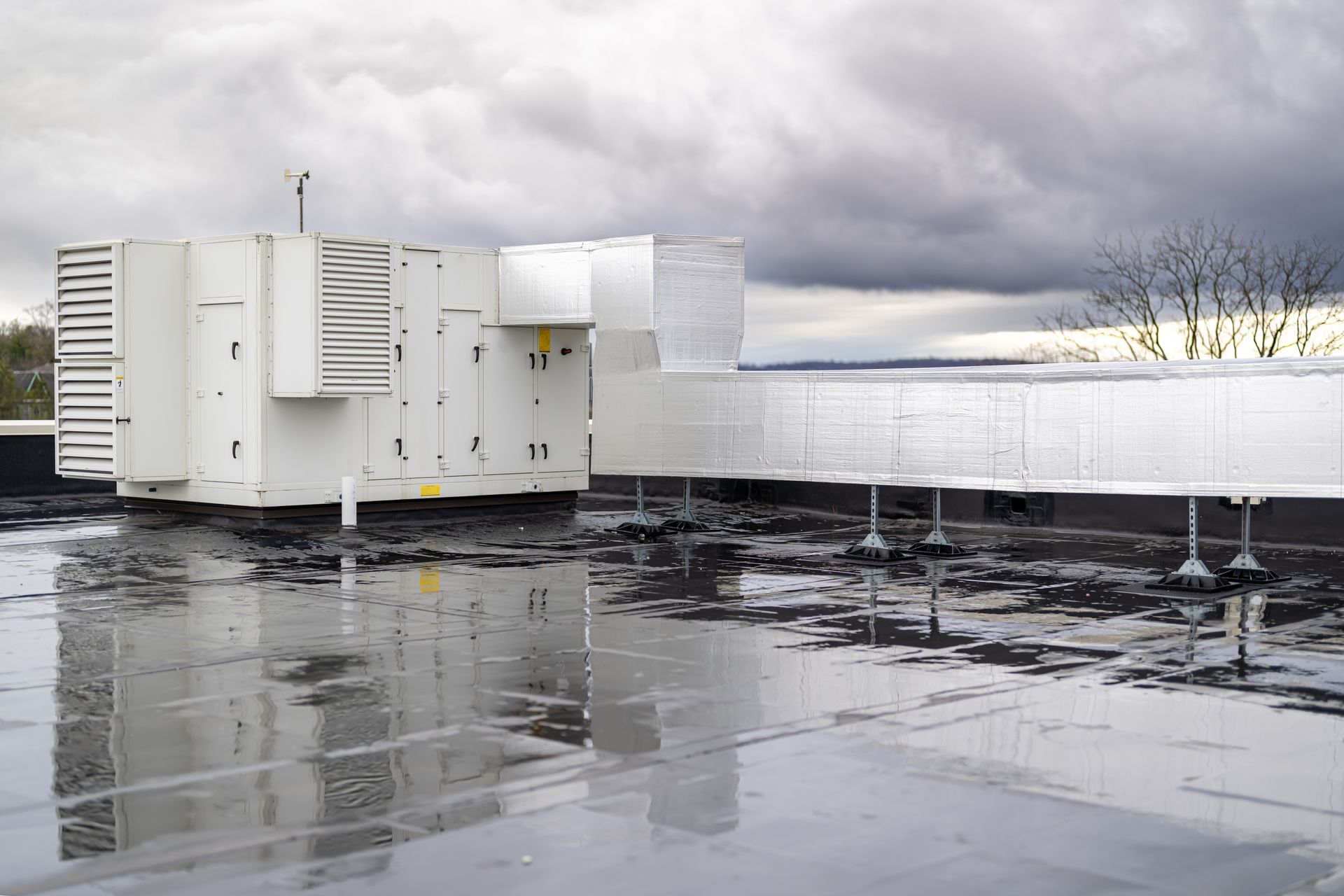
Improper economizer operation is a recurring issue in rooftop units across light commercial buildings in Arlington and Fort Worth.
When working properly, economizers reduce cooling costs and support ventilation requirements. When they are misconfigured or poorly maintained, they can introduce comfort issues, indoor air quality complaints and unnecessary operating expense that can persist for years without drawing attention.
When Economizers Create Problems Instead of Savings
Most economizer problems do not cause immediate failures. Issues are easy to ignore when the system continues to run without obvious problems or tenant complaints. Over time, however, an improperly calibrated economizer can lead to sporadic IAQ complaints, humidity issues during mild weather or utility costs that do not align with outdoor conditions.
In many cases, the RTU will appear to heat or cool effectively but behave inconsistently depending on the time of year.
What Improper Economizer Setup Looks Like in Practice
Common setup issues include outside air dampers that do not match commanded positions, sensors that have drifted out of calibration or changeover logic that no longer reflects current DFW weather patterns.
Minimum outside air settings may also be altered during service or retrofit work and never be reset to the correct specifications. Individual issues may seem minor, but together they can significantly affect system performance.
Indoor Air Quality Issues
When economizer dampers fail closed or minimum outside air is set too low, ventilation will suffer. Occupants may notice lingering odors, stale air or increased CO₂ levels, particularly in higher-density spaces.
Because these conditions develop gradually, they are often attributed to occupancy changes or building age rather than a control issue at the rooftop unit.
IAQ complaints are frequently one of the first visible signs that economizer operation needs attention.
Humidity and Comfort Problems in North Texas
Humidity control is a common challenge in North Texas, and improper economizer operation can make it worse. During shoulder seasons, outdoor air may be cool enough to satisfy temperature demand but still carry significant moisture. If the economizer brings in that air when conditions are not truly favorable, the unit’s latent capacity can be overwhelmed.
The result is space conditions that meet temperature setpoints but feel clammy or uncomfortable. These issues are often misdiagnosed as cooling capacity or equipment problems when the root cause is outside air control.
Energy Use and Equipment Impact
Compressors may run unnecessarily when economizers fail to take advantage of suitable outdoor conditions. In other cases, increased cycling occurs as the system attempts to offset poor outside air control.
During heating season, excessive outside air can increase heating demand and contribute to simultaneous heating and cooling. Over time, this added runtime accelerates wear on compressors, fans and heating components, increasing maintenance costs without improving comfort.
Heating-Season Effects That Are Easy to Miss
Although economizers are often viewed as a cooling feature, their impact does not stop when cooling season ends. In mild winter conditions, improperly configured economizers can introduce more cold outside air than necessary. This increases heating load and can create drafts or uneven temperatures during morning warm-up.
Because heating season in North Texas is relatively short, these effects are often accepted as normal operation rather than recognized as a control issue.
Code and Compliance Considerations in Practice
Improper economizer operation can undermine required ventilation rates and energy performance goals, particularly during retrofits, recommissioning efforts or ownership transitions.
While property owners are unlikely to face immediate penalties for a misconfigured economizer, unresolved issues can surface during system evaluations, tenant improvements or broader energy assessments.
Why Economizer Problems Persist
Economizer issues often remain unresolved because systems continue to operate and comfort complaints may be inconsistent. Unlike compressors or burners, economizers receive less attention during routine service unless a problem is obvious. Since failures tend to appear only under specific outdoor conditions, long periods can pass without anyone noticing.
When Economizer Issues Require Professional Evaluation
Persistent IAQ complaints, unexplained humidity problems or energy use that does not track with seasonal conditions are strong indicators that economizer operation should be evaluated.
In many cases, correcting damper control, sensor accuracy or changeover logic can restore performance without major equipment changes.
That diagnostic focus is a key part of how Tom's Commercial approaches RTU service. Call us at (817) 857-7400 for an assessment of your RTUs’ economizers and eliminate the downstream problems that improper outside air control can create year-round.